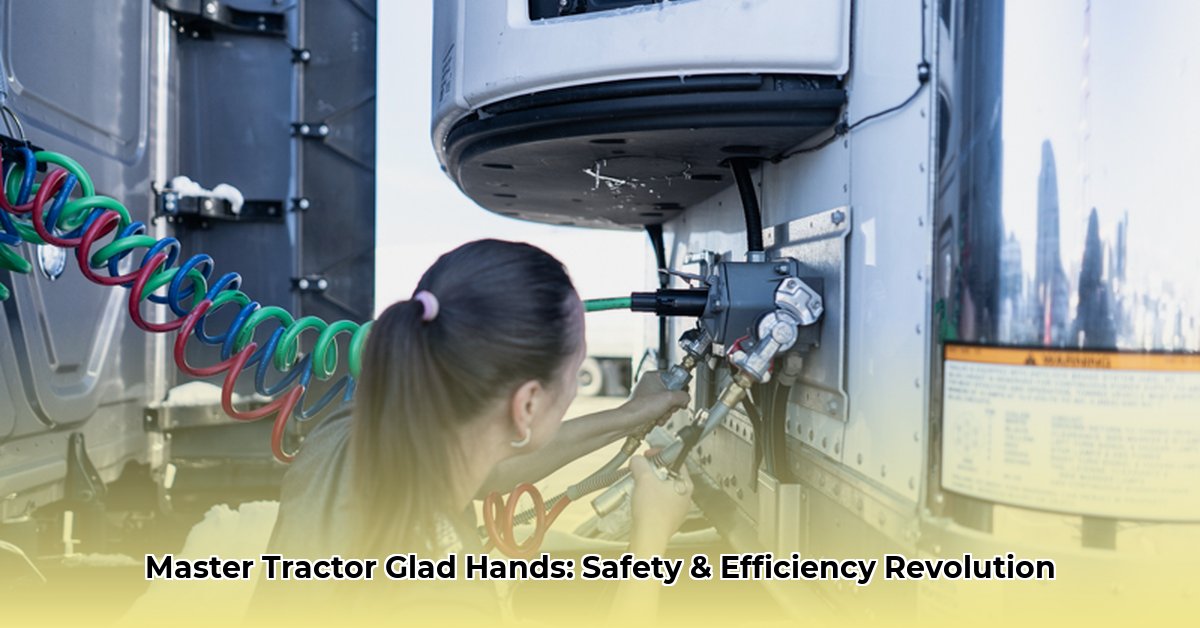
Tractor glad hands—those often-overlooked connectors—are critical for safe and efficient farm operations. They're the vital link between your tractor and implements, enabling the air pressure that powers their hydraulic systems. This guide explains glad hand operation, maintenance, troubleshooting, and the latest innovations like QWIK-E®, helping you ensure smooth and safe operation. For more technical details, check out this helpful resource on tractor couplings.
How Tractor Glad Hands Work
A glad hand system uses two quick-connect couplers to transfer air pressure. One coupler is on the tractor, the other on the implement. Connecting them allows air to flow, activating the implement's hydraulics. A secure connection is paramount; air leaks reduce pressure, causing poor performance and potentially dangerous situations. Even a subtle hiss or decreased implement capacity warrants immediate attention.
Types of Tractor Glad Hands
Standard glad hands are reliable and inexpensive, but newer designs offer improvements. QWIK-E®, for example, boasts faster connection and disconnection, minimizing downtime.
| Glad Hand Type | Advantages | Disadvantages |
|---|---|---|
| Standard | Reliable, widely available, generally inexpensive | Slower connection/disconnection, more wear |
| QWIK-E® and similar | Faster connection/disconnection, reduced wear | Potentially higher initial investment |
Inspecting and Maintaining Your Tractor Glad Hands
Regular inspections are crucial for safety and preventing costly repairs. A small leak today can become a major breakdown tomorrow.
Step-by-Step Inspection and Maintenance:
- Visual Check: Examine each glad hand and connector for cracks, bends, rust, or damage.
- Air Leak Test: After connecting, listen for hissing sounds indicating leaks.
- Secure Connections: Ensure glad hands mate smoothly and firmly. A loose connection causes leaks and malfunctions.
- Regular Lubrication: Periodically lubricate connectors with the appropriate grease (check your owner's manual). This ensures smooth operation and reduces wear.
Troubleshooting Common Problems
Even with regular maintenance, issues can arise.
- Air Leaks: If you hear hissing, inspect connectors for damage. Check seals and replace if needed. Ensure the coupling is fully seated.
- Damaged Connectors: Replace bent or cracked connectors immediately; they're safety hazards.
- Malfunctioning Components: Consult your tractor's manual or a qualified mechanic for complex issues.
Regulatory Compliance
Maintaining your glad hands isn't just about efficiency; it's about adhering to safety regulations. Familiarize yourself with local and federal guidelines for agricultural equipment. Regular inspections are often legally mandated.
Cost-Benefit Analysis of Qwik-E Glad Hands
Switching to Qwik-E glad hands can lead to significant cost savings. A thorough ROI (Return on Investment) analysis should consider:
- Initial Investment: Compare the cost of Qwik-E and standard glad hand purchases and installation.
- Maintenance Savings: Project reduced maintenance costs due to less frequent repairs and downtime.
- Downtime Reduction: Quantify time saved through faster connections and reduced repair times, considering lost productivity and labor costs.
- Fuel Savings (Potential): Smoother braking might improve fuel efficiency.
- Total Return: Sum savings from maintenance, downtime, and potential fuel cost reductions.
- Net Return: Subtract initial investment from the total return.
- ROI Calculation: Divide net return by the initial investment to determine the percentage return for each dollar invested.
The Future of Tractor Glad Hands
While pneumatic systems are the current standard, electronic systems are under development, potentially offering enhanced control. However, for now, proper maintenance of your existing glad hand system is paramount.
Conclusion
Neglecting your tractor's glad hands poses significant safety and economic risks. Proactive maintenance prevents costly downtime and ensures safety. Regular inspections and a well-defined maintenance schedule are crucial for efficient and safe farming operations. Don't let a small detail compromise your farm's success and your safety.